More on the Brontës
More information about our live online Season on the Brontës

Join us for a Season of six live online lectures and seminars, Saturdays, monthly, 5 September 2026 to 13 March 2027. (No lecture in December.) You can book as many individual lectures as you like, or you can book the whole season at a discount.
Lecture list
• Saturday 5 Sept. 2026. Kate Eliot, Juvenilia of the Brontës
• Saturday 3 Oct. 2026. Trudi Tate, Power and Injustice: Emily Brontë, Wuthering Heights (1847).
• Saturday 7 Nov. 2026. Greta Colombani, The Poetry of Emily Brontë.
• Saturday 9 January 2027. Clare Walker Gore, Space and Place: Charlotte Brontë, Jane Eyre (1847).
• Saturday 13 February 2027. Corinna Russell, Charlotte Brontë, Villette (1853).
• Saturday 13 March 2027. Alison Hennegan, Anne Brontë, The Tenant of Wildfell Hall (1848).
Details of lectures 3 and 4 below.
Lecture 3. The strange and powerful poetry of Emily Brontë.
During her short, private life, Emily Brontë agreed to share with readers outside her family only twenty-one of her poems, which appeared in the first book published by the Brontë sisters under pseudonyms and at their own expense: Poems by Currer, Ellis, and Acton Bell (1846). Far from spontaneous, this act of sharing was prompted by a violation that had at first infuriated her. Charlotte had come up with the idea for the collection after discovering the notebooks where Emily had been secretly transcribing the poems she had been writing since her teenage years.
While the book ended up only selling two copies one year after publication, Emily’s poetry continues to attract and captivate readers today as a possible window into the soul of one of the most elusive and mysterious figures in English literature. This lecture will offer a journey through the lyrical depth, visionary intensity, and rich variety of Emily’s published and unpublished poems, from her fierce confrontations with loss, confinement, and her own mortality, to her evocations of the sublime, solitary wildness of the moors, to the several tales of violence, passion, and betrayal set in Gondal, the mythic country that she had invented with Anne as young adolescents and that never ceased to haunt her imagination.
With Greta Colombani, Schwarzman Centre for the Humanities, University of Oxford.
Further information and booking page.
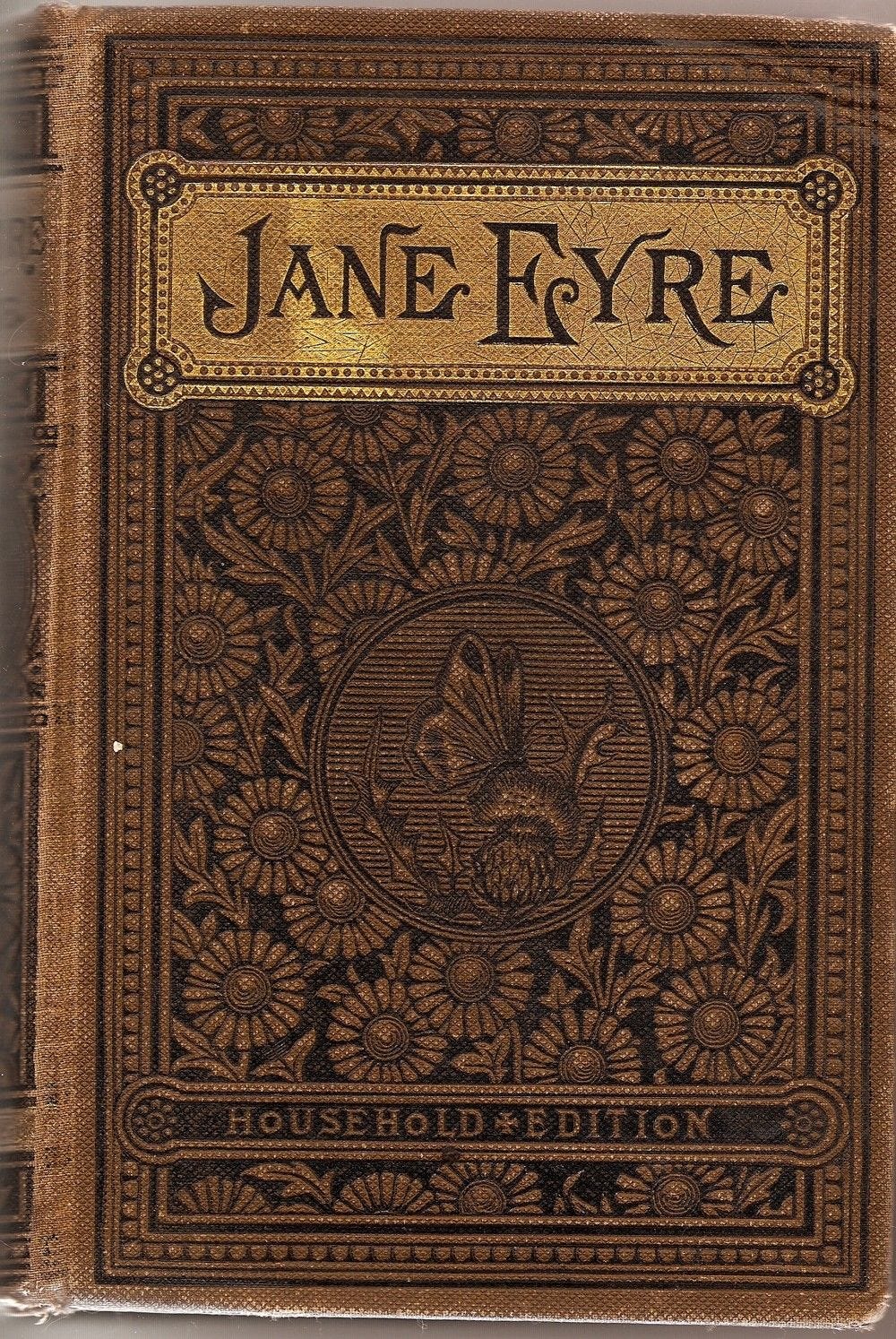
Lecture 4. Space and Place in Jane Eyre
Charlotte Brontë is powerfully associated with a particular place: the parsonage at Haworth, and the moors that surround it. Her most famous heroine, meanwhile, the homeless orphan Jane Eyre, is associated with mobility, the desire for liberty that drives her from place to place and shocked her first readers.
In this lecture, I will argue that Jane Eyre is a novel profoundly concerned with both the longing for home and the longing for escape, and that this tension is expressed in Jane’s relationships to the succession of places in which she finds herself variously tormented, imprisoned, and sheltered. From Jane’s miserable beginnings at Gateshead to her repressive schooling at Lowood, her complex love affair with the gothic castle of Thornfield and her uneasy sojourn at Marsh End, I will explore Brontë’s vivid depictions of a succession of settings, arguing that they are vital to the novel’s generic hybridity, and its lasting imaginative power.
With Professor Clare Walker Gore, Fellow of Lucy Cavendish College, University of Cambridge.
Further information and booking page.